How I Manage Funds Without Losing Sleep – Real Talk on Smarter Allocation
What if managing your money didn’t have to feel like gambling? I used to stress over every decision, chasing returns and dodging losses. Then I shifted my focus—from picking winners to building resilience. Fund management isn’t about magic moves; it’s about structure, discipline, and smart trade-offs. This is how I learned to balance growth and safety, using real strategies that don’t rely on luck or hype. The turning point came when I realized that sustainable wealth isn’t built in a single year of high returns, but through consistent choices across decades. It’s not about avoiding risk altogether, but understanding it, measuring it, and planning for it. That shift in mindset changed everything.
The Wake-Up Call: When My Portfolio Nearly Broke Me
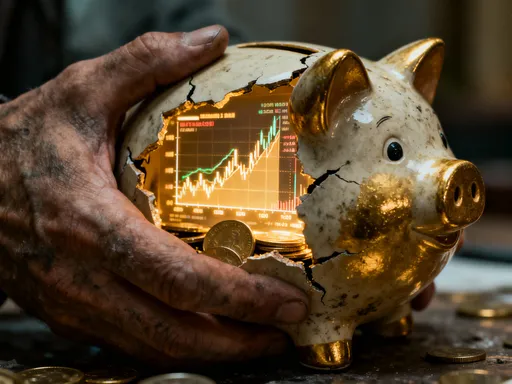
There was a time when I believed that more risk meant more reward—and that holding aggressive investments was the only way to get ahead. I poured a large portion of my savings into high-growth tech stocks, convinced that their momentum would carry me into financial freedom. For a while, it worked. My account balance swelled, and I began to feel like I had cracked the code. But then the market corrected. Within weeks, nearly 30% of my portfolio’s value evaporated. I wasn’t alone—many investors felt the sting—but the emotional toll was personal. I questioned every choice, every assumption. More importantly, I questioned my own judgment.
That moment of loss became a pivotal lesson. I had confused activity with strategy and confidence with competence. My approach lacked structure. There was no clear plan for what to do when markets turned, no predefined exit points, and no emotional safeguards. I had reacted to news, followed trends, and let fear and greed dictate my moves. The truth was, I wasn’t managing my funds—I was reacting to them. That realization was uncomfortable, but necessary. I began studying how professional fund managers operate, not to mimic their exact moves, but to understand their principles. What I discovered was not a secret formula, but a disciplined framework built on patience, diversification, and long-term alignment with personal goals.
From that point forward, I stopped measuring success by quarterly returns and started evaluating my progress by how well I stuck to my plan. I accepted that market downturns are not failures, but part of the cycle. Instead of trying to time the bottom or chase rebounds, I focused on what I could control: my asset mix, my costs, and my behavior. This mindset shift didn’t eliminate losses, but it gave me the stability to endure them without panic. It also taught me that protecting capital is just as important as growing it. In fact, avoiding large drawdowns often leads to better long-term outcomes than chasing short-term highs. That lesson has shaped every financial decision I’ve made since.
What Fund Management Really Means (And What It Doesn’t)
Many people think fund management is about picking the next winning stock or jumping into the latest trend before it explodes. In reality, it’s far less dramatic and much more systematic. True fund management is the ongoing process of aligning investments with your financial goals, risk tolerance, and time horizon. It’s not about beating the market every year, but about building a portfolio that can weather uncertainty while steadily moving toward your objectives. It’s about making deliberate choices, not impulsive reactions.
At its core, fund management is about structure. It involves setting clear investment policies, monitoring performance against benchmarks, and making adjustments based on changes in your life or the economic environment—not on headlines or emotions. It includes cost control, tax efficiency, and behavioral discipline. It’s also about understanding that not all risk is equal. Some risks are rewarded with higher expected returns, like holding equities over bonds. Others, like concentrating too much in one sector or holding high-fee funds, offer no real benefit and only increase vulnerability.
One of the biggest misconceptions is that active management always leads to better results. While some skilled managers do outperform, studies consistently show that most fail to beat their benchmarks after fees over the long term. This doesn’t mean active management is useless, but it does mean that investors should be cautious about paying high fees for promises that often go unfulfilled. Instead, a smarter approach combines passive strategies—like index funds—for broad market exposure with selective active choices where value can be added, such as tax-efficient asset placement or strategic rebalancing.
Another key insight is that fund management is not a one-time event. It’s a continuous process. Markets change. Life changes. Your income, expenses, family situation, and goals evolve. A portfolio that made sense ten years ago may no longer fit your current needs. Regular review and adjustment are essential. This doesn’t mean constant trading, but thoughtful evaluation to ensure your investments still serve your purpose. When I began to see fund management this way—as an ongoing practice rather than a performance contest—I stopped obsessing over daily fluctuations and started focusing on what truly matters: long-term sustainability.
Building Your Foundation: The Role of Asset Allocation
If there’s one principle that has had the greatest impact on my financial journey, it’s asset allocation. Research has shown that over 90% of portfolio return variability over time is explained by how assets are divided across categories, not by individual stock picks or market timing. In other words, deciding how much to put in stocks, bonds, real estate, and cash equivalents matters far more than choosing which specific stock to buy. Asset allocation is the blueprint of your financial house. Without a solid foundation, even the most attractive furnishings won’t make it safe or stable.
My own allocation strategy is built on three pillars: growth, stability, and liquidity. Equities provide long-term growth potential, so I maintain a meaningful exposure, especially in low-cost, diversified index funds. Bonds offer stability and income, helping to reduce overall portfolio volatility, particularly during market downturns. Real estate, both direct and through REITs, adds diversification and inflation protection. Cash and cash equivalents ensure I have ready access to funds for emergencies or opportunities without having to sell investments at an inopportune time.
The exact mix depends on personal factors like age, income, financial goals, and emotional comfort with risk. When I was younger, I could afford to take on more equity risk because I had time to recover from losses. Now, as I approach midlife, I’ve gradually shifted toward a more balanced allocation, increasing my bond exposure to preserve capital. This isn’t about predicting the market, but about managing risk in a way that aligns with my life stage. I also adjust for major life events—like a child starting college or a planned home purchase—by temporarily increasing my cash holdings.
One of the most powerful tools in asset allocation is rebalancing. Over time, some investments grow faster than others, causing your original mix to drift. For example, if stocks perform well, they may become a larger portion of your portfolio than intended, increasing your risk exposure. Rebalancing means selling some of the outperforming assets and buying more of the underperforming ones to return to your target allocation. It’s a disciplined way to “buy low and sell high” without trying to time the market. I rebalance once a year or when my allocation shifts by more than 5%, whichever comes first. This simple habit has helped me stay on track without overreacting to short-term noise.
Risk Control: Not Just Damage Prevention, But Performance Protection
I used to view risk control as a defensive tactic—an obstacle to high returns. I thought that if I wanted growth, I had to accept volatility. But I’ve come to see risk management differently. It’s not a brake on performance; it’s a steering wheel. It allows me to navigate uncertainty with confidence, knowing I won’t be forced out of the market at the worst possible time. The goal isn’t to eliminate risk, but to understand it, measure it, and manage it in a way that supports long-term success.
One of the most effective risk control tools is diversification. By spreading investments across different asset classes, sectors, and geographies, I reduce the impact of any single failure. If one market crashes, others may hold steady or even rise. Diversification doesn’t guarantee profits or prevent all losses, but it does smooth out the ride. I also pay attention to position sizing—ensuring no single investment makes up too large a portion of my portfolio. This prevents emotional attachment and limits downside if a particular holding underperforms.
Another key strategy is using downside protection mechanisms. These can include stop-loss orders, put options, or simply maintaining a cash buffer. While I don’t use complex derivatives, I do keep a portion of my portfolio in short-term bonds and money market funds that can act as shock absorbers during downturns. This allows me to avoid selling equities when prices are low to cover expenses. Instead, I can draw from stable assets and wait for markets to recover.
Behavioral risk is just as important as market risk. The biggest threats to long-term returns often come from emotional decisions—selling in a panic, buying at peaks, or chasing performance. I’ve learned to set rules in advance: I won’t make trades based on news headlines, I won’t invest more than a set percentage in any single idea, and I’ll stick to my rebalancing schedule regardless of market sentiment. These rules create a system that protects me from myself. Over time, this disciplined approach has allowed my portfolio to compound more effectively, because I’ve stayed invested through cycles instead of jumping in and out.
The Hidden Costs That Eat Returns Alive
One of the most eye-opening discoveries in my fund management journey was how much seemingly small costs can erode long-term returns. I once ignored an expense ratio of 1.2% on a mutual fund, thinking it was a minor fee. But over ten years, that 1.2% added up to tens of thousands of dollars in lost gains—money that could have been mine if I’d chosen a lower-cost alternative. The impact of fees is silent but powerful, compounding against you over time. What feels negligible in a single year becomes a massive drag over decades.
Expense ratios are just one piece. There are also trading commissions, account maintenance fees, advisory charges, and tax inefficiencies. Each of these eats into your returns, often without you noticing. For example, frequent trading can generate short-term capital gains, which are taxed at higher rates than long-term gains. A fund that churns its portfolio often may deliver the same pre-tax return as a low-turnover fund, but after taxes, the investor keeps far less.
I responded by shifting toward lower-cost investment vehicles. I moved much of my equity exposure to broad-market index funds and ETFs, which typically have expense ratios below 0.10%. For bonds, I chose low-cost mutual funds or individual Treasuries, depending on my needs. I also consolidated accounts to reduce maintenance fees and switched to advisory services that charge transparent, fee-only structures rather than commissions.
Tax efficiency became another priority. I place tax-inefficient investments—like bond funds or REITs—in tax-advantaged accounts like IRAs or 401(k)s, while holding stocks with potential for long-term capital gains in taxable accounts. I also use strategies like tax-loss harvesting, where I sell losing positions to offset gains, reducing my tax bill without changing my overall allocation. These moves don’t require constant attention, but they’ve made a meaningful difference. By cutting unnecessary costs, I’ve effectively increased my net returns—not by taking more risk, but by keeping more of what I earn.
Practical Moves: What I Do Every Quarter to Stay on Track
Success in fund management doesn’t come from dramatic actions, but from consistent, practical habits. I’ve found that quarterly reviews strike the right balance between staying informed and avoiding overreaction. My routine isn’t complicated, but it’s thorough. I start by reviewing my portfolio’s performance, not to judge short-term results, but to ensure it’s still aligned with my long-term plan. I compare my current asset allocation to my target and note any significant deviations.
If certain assets have grown too large, I trim them back and reinvest in underweight areas. This is my rebalancing in action. I also check dividend payouts and ensure they’re being reinvested or directed according to my cash flow needs. If I’ve received a bonus or made a large purchase, I assess whether my emergency fund is still adequately funded—typically three to six months of living expenses in a liquid account.
I also take this time to review any life changes. Has my income shifted? Are there new financial goals, like saving for a family vacation or helping with a child’s education? These factors may call for adjustments in my savings rate or investment mix. I also scan for any new fees or changes in fund policies that could affect my holdings. While I don’t make changes every quarter, this regular check-in keeps me proactive rather than reactive.
One of the most valuable parts of this routine is the reflection. I ask myself: Have I followed my rules? Did I make any emotional decisions? What lessons can I apply going forward? This self-review builds accountability and reinforces discipline. Over time, these small, consistent actions compound—just like my investments—creating a system that works whether markets are calm or chaotic.
Why Long-Term Thinking Beats Short-Term Wins—Every Time
The most transformative shift in my approach to fund management wasn’t technical—it was mental. I stopped chasing performance and started trusting the process. Markets are unpredictable in the short term, but they reward patience over time. The S&P 500 has delivered an average annual return of about 10% over the long term, but that growth comes with volatility. Investors who panic during downturns miss the recoveries. Those who stay the course benefit from compounding.
I’ve learned to focus on what I can control: my savings rate, my costs, my allocation, and my behavior. I don’t know what the market will do next year, but I know that consistent investing, disciplined rebalancing, and low fees will serve me well over decades. This mindset has freed me from the anxiety of daily price swings. I no longer feel the need to check my account every day or react to every economic headline.
Long-term thinking also changes how I view risk. Instead of fearing market drops, I see them as opportunities to buy quality assets at lower prices—especially through automatic contributions that benefit from dollar-cost averaging. I’ve accepted that setbacks are part of the journey. What matters is not avoiding every loss, but maintaining a strategy that survives and thrives through cycles.
Perhaps the greatest benefit of this approach is peace of mind. I sleep better knowing my finances are built on a solid, thoughtful foundation. I’m not rich overnight, but I’m building lasting security. And in a world full of financial noise and hype, that kind of reliability is more valuable than any short-term win.
Managing funds isn’t about getting rich quick—it’s about staying rich steadily. Through smarter allocation, disciplined risk control, and practical habits, I’ve built a system that works whether markets rise or fall. It’s not flashy, but it’s reliable. And in the world of finance, reliability is the rarest return of all.